


Jo the Wanderer: How to Read Music: Cantorin Notations Explained
Updated: Feb 8
Greetings, fellow travelers and music lovers! Jo here, and today I want to share something close to my heart: how to read the musical notations we use here in Cantorin. Whether you're a complete newcomer to music or someone who's picked up bits and pieces along various roads, this guide will help you understand our system so you can join in the songs around the hearth or even play a simple tune on your own.
Why Learn to Read Cantorin Music?
After decades of wandering these lands with my lute strapped to my back alongside my sword, I've learned that music truly is the universal language. In every tavern, every village hall, every campfire gathering, there's always someone ready to share a song. But here's the thing: while you can certainly learn tunes by ear (and many folk do), being able to read our notation opens up a whole world of possibilities.
You'll find music written on parchment in libraries, carved into stone in some of the older halls, and copied carefully by scribes who preserve our musical heritage. Learning to read it means you can learn songs even when there's no one around to teach them to you directly.
The Foundation: Understanding the Staff
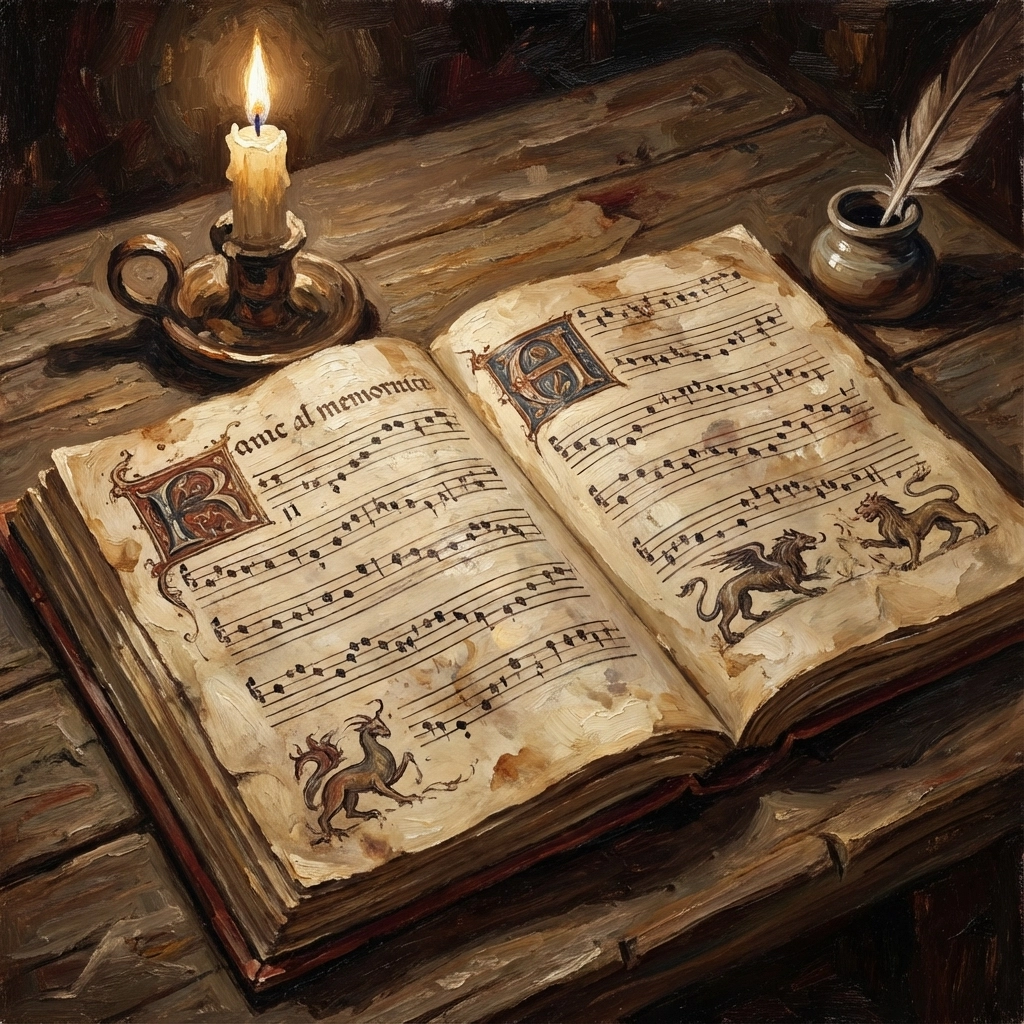
Let's start with the backbone of Cantorin notation: what we call the staff. Picture five horizontal lines, evenly spaced, running across your parchment. These lines, and the spaces between them, represent different pitches or notes.
Think of it like a ladder. Each rung of the ladder represents a different sound: some higher, some lower. The bottom line represents the lowest sounds, and as you move up the staff, the sounds get higher.
We read these lines from bottom to top:
Bottom line (first line)
First space
Second line
Second space
Third line
Third space
Fourth line
Fourth space
Fifth line (top line)
The Clef: Your Musical Compass
At the beginning of every piece of Cantorin music, you'll see a symbol that looks a bit like an ornate spiral or curved blade. We call this the clef, and it tells you exactly which pitches correspond to which lines and spaces.
The most common clef in Cantorin is what we call the "Song Clef": it curls around the second line and tells us that this line represents the note we call "Sol." From there, everything else falls into place. The space below Sol is "Fa," the line below that is "Mi," and so on.
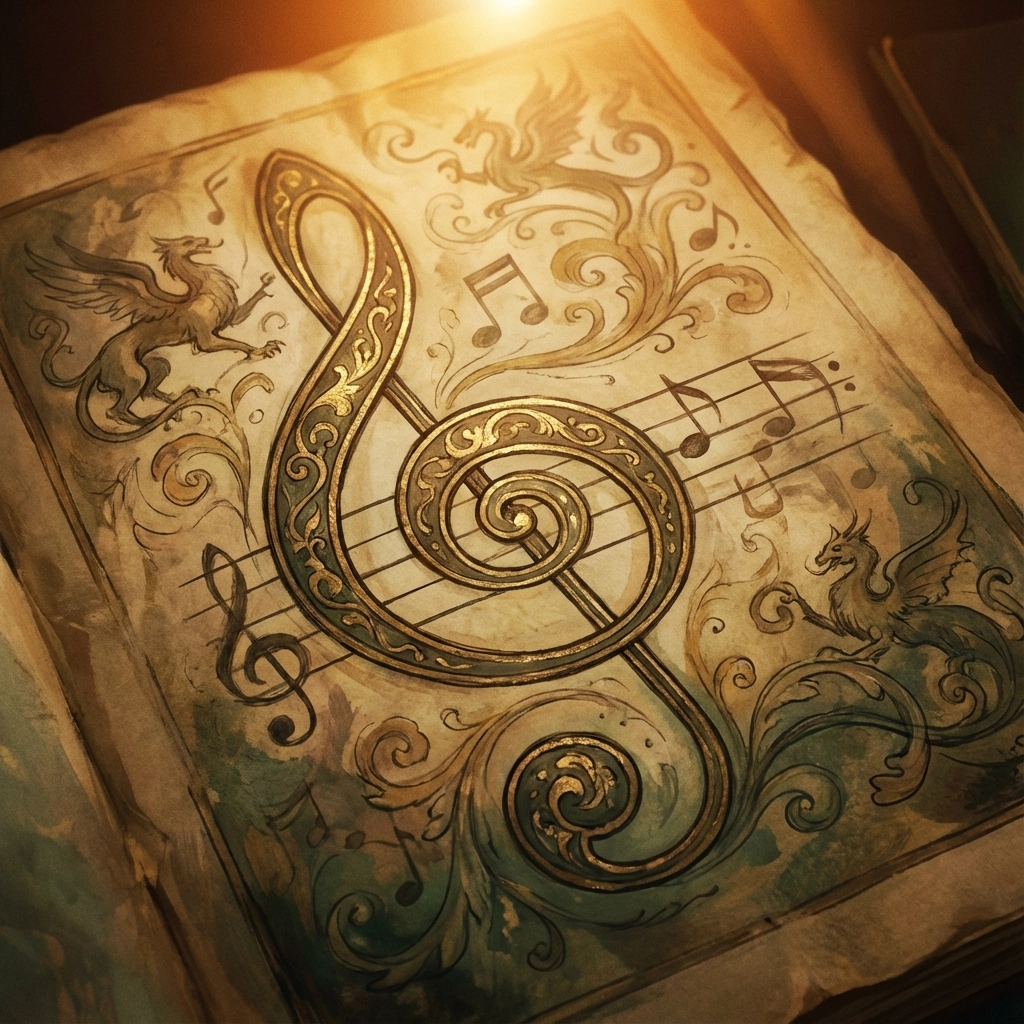
This system gives us seven basic note names that repeat as you go higher or lower: Do, Re, Mi, Fa, Sol, La, Ti. Then it starts over with Do again, but at a higher pitch.
Note Values: Understanding Time
Reading pitch is only half the battle. Music also exists in time, and our notation shows you how long to hold each note. Here's where Cantorin notation gets particularly elegant.
We use different symbols to represent different durations:
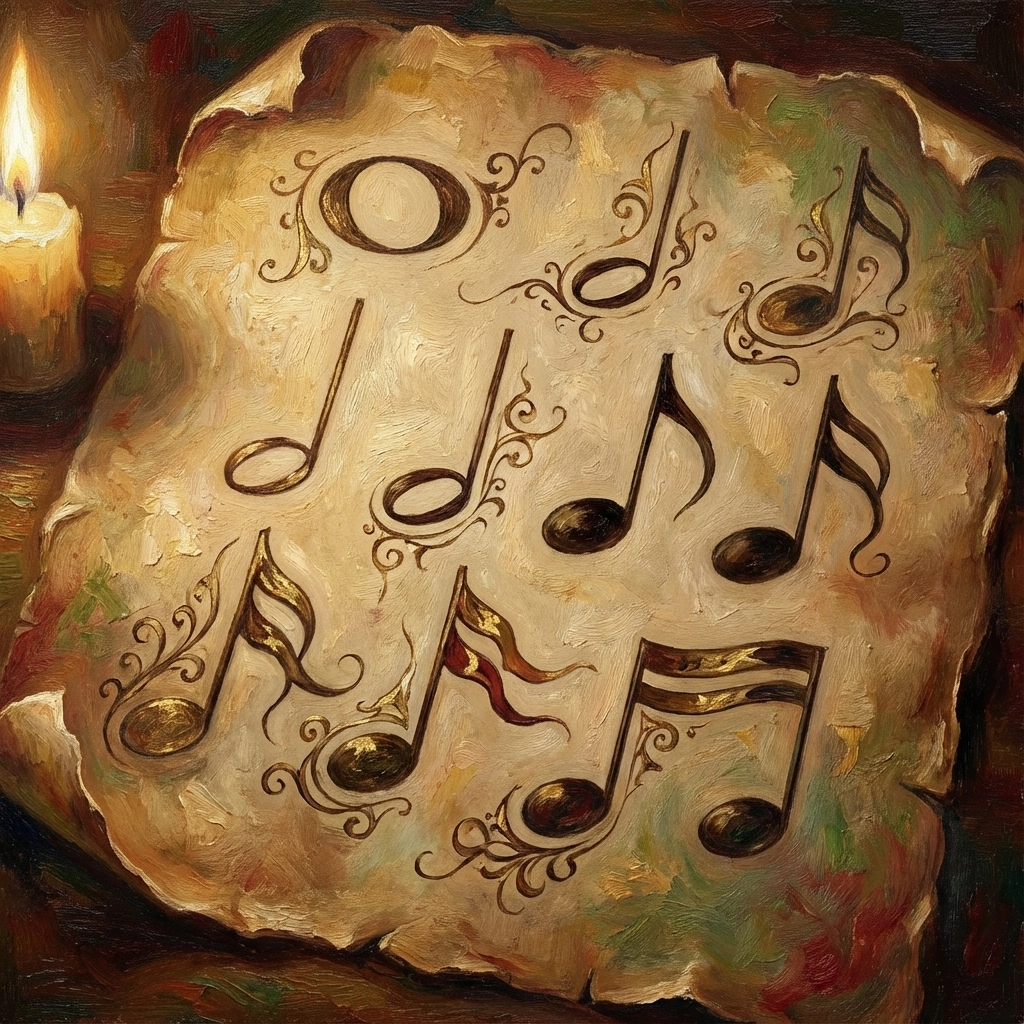
The Whole Note: Looks like an empty circle. Hold this for four steady counts: imagine counting "one, two, three, four" at a comfortable walking pace.
The Half Note: An empty circle with a stem attached. Hold for two counts.
The Quarter Note: A filled-in circle with a stem. This gets one count and is often the basic pulse of a song.
The Eighth Note: A filled-in circle with a stem and a flag. Half a count each: two eighth notes fit into one quarter note.
When you see multiple eighth notes together, we often connect their flags with a horizontal line called a beam. This makes the music easier to read quickly.
Rests: The Silence Between
Music isn't just about the notes you play: it's also about the spaces between them. We call these silences "rests," and they're marked with specific symbols that correspond to our note values.
A whole rest looks like a small black rectangle hanging from a line. A half rest is the same rectangle, but sitting on top of a line. Quarter rests look a bit like lightning bolts, and eighth rests resemble flags.
Learning to observe rests is crucial. They give music its rhythm and breathing room. Trust me, after years of playing around campfires, I've learned that the pauses can be just as important as the notes themselves.
Time Signatures: The Framework
At the beginning of a piece, right after the clef, you'll see two numbers stacked on top of each other. This is called the time signature, and it tells you how to count time in that particular song.
The top number tells you how many beats are in each measure (a measure being one complete cycle of the rhythm). The bottom number tells you what type of note gets one beat.
The most common time signature in Cantorin is "4/4": four quarter-note beats per measure. When you clap along to most of our folk songs, you're probably clapping in 4/4 time.
Another popular one is "3/4," which gives you three quarter-note beats per measure. This creates that lilting, waltz-like feeling you hear in many of our traditional dances.
Key Signatures: Setting the Mood
Right after the clef, you might see one or more sharp or flat symbols. These make up what we call the key signature, and they tell you which notes to raise or lower throughout the entire piece.
A sharp looks like our symbol for "cross-roads" (#), and it raises a note by a half-step. A flat resembles a blade turned sideways (♭), and it lowers a note by a half-step.
Don't worry if this seems complex at first: many beautiful Cantorin songs use no sharps or flats at all. Start with these simpler pieces as you're learning.
Reading Music in Practice
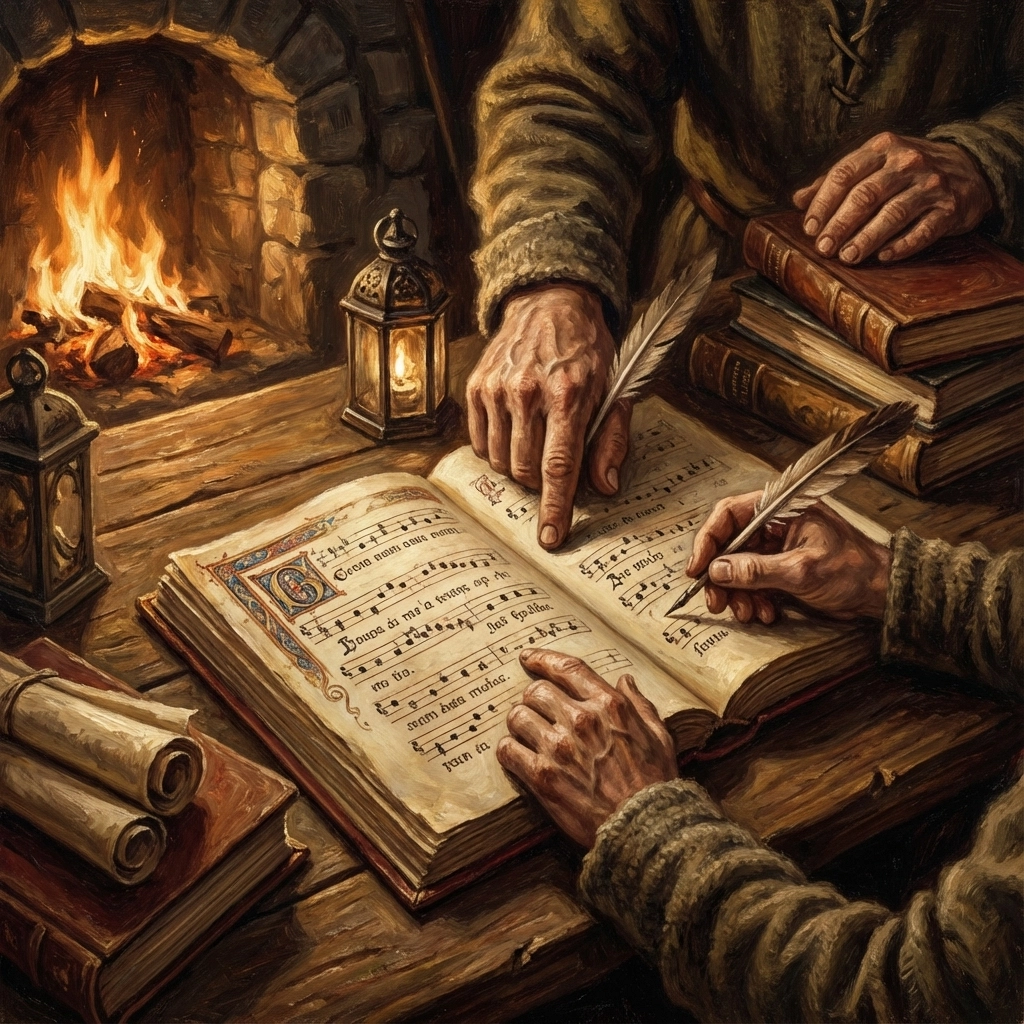
Here's my practical advice for actually learning to read: start small. Find a simple Cantorin folk tune: maybe one you already know by ear: and follow along with the notation. Point to each note as you sing or hum the melody.
Practice identifying notes on the staff without worrying about rhythm at first. Then practice clapping rhythms without worrying about pitch. Once both feel comfortable, combine them.
Many of the musicians I've met over the years learned to read music this way: bit by bit, song by song, always building on what they already knew.
Common Cantorin Musical Terms
As you delve into written music, you'll encounter various markings and terms:
Forte: Play or sing loudly, with confidence Piano: Play or sing softly, gently Ritardando: Gradually slow down Accelerando: Gradually speed up Da Capo: Return to the beginning
These Italian terms have been adopted throughout many lands, including ours, because they provide a common musical language that traveling musicians can understand regardless of their home dialect.
Your Musical Journey Begins
Learning to read Cantorin notation is like learning any new language: it takes time, patience, and practice. But I promise you, the investment is worth it. There's something magical about being able to look at marks on parchment and hear the music in your mind, or to pick up a piece written by someone you've never met and bring their musical thoughts to life.
Whether you're planning to play professionally in the great halls or simply want to accompany yourself around the evening fire, these basics will serve you well. Remember, every master musician started exactly where you are now: staring at those five lines and wondering how they could possibly make sense.
Take it one note at a time, one song at a time. Before long, you'll find yourself reading music as naturally as you read words.
Safe travels and sweet music, Jo the Wanderer
Want to hear some of these concepts in action? Visit our YouTube channel where we regularly share traditional Cantorin music and tutorials: https://www.youtube.com/@cantorin
Comments